Structural Drying & Dehumidification in Spicewood, TX
Air movers and LGR dehumidifiers dry slabs, wall cavities, and framing to a verified standard, not just the surface. Our local crews monitor daily until it holds, 45 to 75 minutes out.
(737) 530-9201Tap to call our 24/7 dispatch line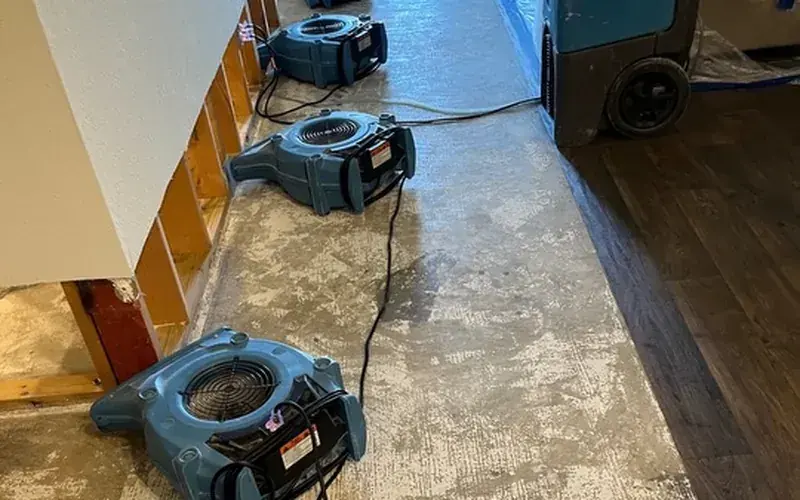
Extracting the standing water is only half the job. The water that soaked into the slab, the framing, and the wall cavities is what warps floors and grows mold, and it does not leave on its own, least of all in a humid Central Texas summer. Structural drying is the controlled process that pulls that trapped moisture back out to a measured, verified standard. Texas Dry Home dries the structure so what you keep stays sound.
How we handle structural drying and dehumidification in Spicewood
Call and dispatch
A real person answers 24/7 and the nearest Spicewood crew rolls with pumps, air movers, and moisture meters.
On-site assessment
We find the source and the full reach of the water, including what soaked into the slab, subfloor, and wall cavities.
Extract and dry
We pull the standing water, then run air movers and dehumidifiers to a verified dry standard, not just the surface.
Verify and bill
We log moisture readings until the structure is dry, then document the loss and bill your carrier directly.
Why proper drying matters in Central Texas
Our climate and construction work against a home that is only surface-dried:
- High summer humidity means the outdoor air cannot dry a wet structure, and often makes it worse
- Slab-on-grade concrete and tile over mortar hold water deep and release it slowly
- Moisture wicks up inside walls and under cabinets where a towel never reaches
- Wet framing and drywall grow mold within 24 to 48 hours in the heat
The EPA mold guidance is clear that controlling moisture quickly is the single best way to prevent mold, which is exactly what drying to a target does.
How we dry a home in Spicewood
We build a drying system sized to the loss. Air movers push air across wet surfaces to speed evaporation, low-grain refrigerant (LGR) dehumidifiers pull that moisture out of the air, and containment keeps the drying zone sealed so we are not fighting the whole house. Where water is trapped in a wall or under a floor, we use specialty drying, wall vents, and mat systems to reach it. Then we monitor. Each day a technician logs moisture readings across the affected materials, adjusts the equipment, and tracks progress toward the dry target. This follows straight from our water extraction, so the water is out before the drying starts.
Need a home dried the right way after a leak or flood? Call and a crew is on the way across the Lake Travis Hill Country in 45 to 75 minutes.
☎ Call (737) 530-9201Do not trust a dry look or feel
A floor or wall can feel dry to the hand while the material behind it still reads soaked, which is how mold starts under a repaired surface. We confirm dryness with meters and readings, not by look, so the structure is genuinely dry before any repairs go back.
Drying to a verified standard follows the IICRC method
We dry to the IICRC standard, which means a documented moisture target for each material rather than a guess. We record the readings daily and only pull the equipment once the structure confirms it is dry. That record also gives your insurer clear proof the job was done correctly.
What we dry in place, and what comes out
Wherever we can, we dry materials in place to save you the cost and mess of a rebuild, which is how we handle a slab leak or a ceiling leak. Soaked carpet pad, saturated insulation, and materials touched by contaminated water come out because they cannot be dried safely. If growth already started before we arrived, our mold remediation crew handles it.
"After a leak flooded part of our lower level, they set up drying equipment and actually came back every day to check the readings instead of just leaving fans and disappearing. When they said it was dry, they showed me the numbers. No musty smell, no mold, done right."
Bennett H. · Applehead Island, Horseshoe Bay · February 2026
Why the Lake Travis Hill Country calls us first
On-site in 45 to 75 minutes
A person answers 24/7 and the nearest crew rolls the moment you call, day or night, across the Lake Travis Hill Country.
IICRC-certified crews
Trained technicians with pumps, air movers, and moisture meters who dry to a verified standard, not a mop and a box fan.
We bill your insurer
We document the loss with photos and readings and work with your carrier directly, so the paperwork is not on you.
Deep local knowledge
Flash floods, slab leaks, clay seepage, wells, and attic AC. We know how water moves on Hill Country limestone.
From Spicewood to Marble Falls and across the Lake Travis Hill Country
Seated in Spicewood on State Highway 71, we respond across the west Austin Hill Country, day or night.
Seated in Spicewood on State Highway 71, our crews cover the whole Lake Travis Hill Country, day or night, and reach most homes in 45 to 75 minutes.
We serve Spicewood, Bee Cave, Lakeway, Steiner Ranch, Marble Falls, Horseshoe Bay, Lago Vista, Dripping Springs, and Leander.
See every town and ZIP we serve ›Related restoration services
Spicewood water damage questions, answered
How long does structural drying take?
Most homes dry in 3 to 5 days, though a saturated slab, tile over a mortar bed, or hardwood can take longer. Central Texas humidity slows drying, so we run commercial dehumidifiers and monitor daily rather than relying on the outdoor air or a set number of days.
Why not just use my own fans and open the windows?
In a humid Central Texas summer, opening the windows can add moisture rather than remove it, and household fans do not pull water out of a slab, framing, or a wall cavity. Commercial air movers paired with LGR dehumidifiers actually dry the structure so mold cannot start.
How do you know when it is really dry?
We take daily moisture readings with meters across the affected materials and compare them to a dry target for each one. We only pull the equipment once the readings confirm the structure has reached that target, and we can show you the numbers.
Will you have to tear out my walls and floors?
Not necessarily. We dry materials in place wherever we can to avoid a rebuild, using wall vents and mat systems to reach trapped moisture. Only soaked pad, saturated insulation, and materials touched by contaminated water come out because they cannot be dried safely.
Is the drying equipment loud, and can I stay home?
Air movers and dehumidifiers do run continuously, so there is steady noise, but most homeowners stay through the drying. Leaving the equipment running around the clock is what keeps the drying time short, so we ask that it not be turned off.
Does insurance cover the drying?
Structural drying is a core part of the mitigation a homeowner policy covers for a sudden water loss. We document the loss and the daily readings and bill your carrier directly, and that record is exactly the proof an adjuster wants to see.
A local Spicewood crew is standing by
Water sitting means damage spreading. Call Texas Dry Home and a local crew is on the way, 45 to 75 minutes out across the Lake Travis Hill Country.
(737) 530-9201Call now, a local crew picks up day or night