Ceiling Leak & AC Overflow Water Damage in Spicewood, TX
A clogged attic AC drain overflows straight into the ceiling below. Local crews trace the source, dry the framing and insulation, and save the drywall where they can.
(737) 530-9201Tap to call the 24/7 dispatch line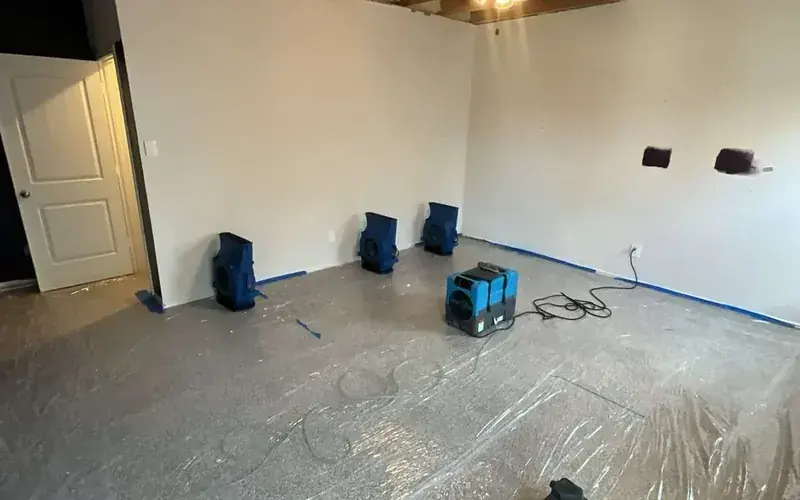
Texas homes run their air handler in the attic, and it pulls gallons of moisture out of the air on a hot summer day. That water drains through a small condensate line, and when the line clogs or the drain pan rusts through, it overflows straight down into the ceiling below. It is a quiet leak, so the first sign is usually a spreading brown ring or a soft spot overhead. Texas Dry Home traces the source, dries the ceiling, and saves the drywall wherever it can.
How ceiling leak and ac overflow damage is handled in Spicewood
Call and dispatch
The response team answers 24/7, and the nearest Spicewood crew heads out with pumps, air movers, and moisture meters.
On-site assessment
The crew finds the source and the full reach of the water, including what soaked into the slab, subfloor, and wall cavities.
Extract and dry
The extraction crew pulls the standing water, then runs air movers and dehumidifiers to a verified dry standard, not just the surface.
Verify and document
Moisture readings are logged until the structure is dry, then the loss is documented with the photos and daily readings an adjuster needs to move a claim.
Why ceilings leak from the inside here
A ceiling leak in the Hill Country almost always starts inside the house, not on the roof:
- An attic AC condensate drain line clogged with algae or dust, so the pan overflows
- A secondary drain pan that has rusted through or was never piped to drain safely
- An upstairs bathroom supply line, toilet, or shower pan leaking down through the floor
- Condensation and sweating ductwork in a hot, humid attic dripping onto the drywall
Because the moisture sits in a closed ceiling cavity, mold can start before you ever see a stain, which the EPA mold guidance ties directly to controlling indoor moisture fast.
Ceiling leak cleanup in Spicewood
The first job is to find the real source, because the wet spot on the ceiling is often not directly below the leak. The tech who does the walkthrough uses a thermal camera and moisture meters to trace the water back to the drain pan, the line, or the fixture, and makes sure the source is stopped, clearing a clogged condensate line or coordinating the fix. Then the crew dries the ceiling cavity, the framing, and the insulation with air movers and dehumidifiers, following the IICRC drying standard so the structural drying crews confirm a dry reading before any drywall repair.
Brown ring or a soft spot on the ceiling? Call before it spreads or the drywall gives way, and a crew is on the way, day or night.
☎ Call (737) 530-9201Flush the AC condensate line every season
Before summer, have the attic condensate line cleared and the drain pan checked for rust, and make sure the secondary pan drains where you will notice it, not into the ceiling. A float switch on the pan shuts the system off before an overflow, and it is the cheapest ceiling insurance there is.
Ceiling leak or roof leak?
The two look alike from below but are handled differently. A ceiling and AC overflow leak comes from inside the house, from the air handler or an upstairs fixture, and shows up in dry weather. A roof and attic leak comes through the roof envelope and shows up during or right after rain, and a storm can drive water in through both. The crew confirms the source before opening the ceiling so the right problem gets fixed.
Drying the cavity and stopping mold
A ceiling cavity holds warm, humid air, so a slow AC overflow that only gets wiped down grows mold on the back of the drywall within days. The drying team dries the framing and insulation to a verified reading and removes only the materials that cannot be saved, and if growth already started, the mold remediation crew contains and clears it.
Why the Lake Travis Hill Country calls the local pros first
Rapid local response
The response team answers 24/7, and the nearest crew heads out the moment you call, day or night, across the Lake Travis Hill Country.
IICRC S500 drying standard
Trained crews with truck-mounted extractors, air movers, and moisture meters who dry to a verified standard, not a mop and a box fan.
Claim-ready documentation
The loss is documented with photos and daily moisture readings, the paperwork an adjuster needs to move a claim.
Lake Travis water experts
Flash floods, slab leaks, clay seepage, wells, and attic AC, so the local pros know how water moves on Hill Country limestone.
From Spicewood to Marble Falls and across the Lake Travis Hill Country
Spicewood water damage pros respond across the west Austin Hill Country, day or night.
Spicewood water damage pros cover the whole Lake Travis Hill Country, day or night, with rapid local response.
Coverage runs across Spicewood, Bee Cave, Lakeway, Steiner Ranch, Marble Falls, Horseshoe Bay, Lago Vista, Dripping Springs, and Leander.
See every town and ZIP covered ›Related restoration services
Spicewood water damage questions, answered
There is a water stain spreading on my ceiling, what do I do?
Put a bucket under any active drip, poke a small relief hole at the lowest point of a bulging spot to keep the drywall from collapsing, and move furniture clear. Then call (737) 530-9201 so the crew can trace the real source, stop it, and dry the ceiling before it spreads or falls.
Why is my attic AC leaking into the ceiling?
The air handler in your attic drains the moisture it pulls from the air through a small condensate line. When that line clogs with algae or the drain pan rusts, the water overflows into the ceiling below. It is one of the most common ceiling leaks in Central Texas, especially in summer.
Is it a ceiling leak or a roof leak?
A ceiling or AC overflow leak comes from inside the house, from the air handler or an upstairs fixture, and usually shows up in dry weather. A roof leak comes through the roof and shows up during or after rain. The crew confirms the source with a thermal camera before opening the ceiling so the right problem gets fixed.
Can you save my ceiling?
Often yes, if the crew gets to it before it sags or molds. The drying team dries the framing and insulation in the cavity and removes only the drywall that cannot be saved, then confirms a dry reading before any patch. The longer a wet ceiling sits, the more of it has to come out.
Do you fix the AC or the plumbing that caused it?
The crew stops the immediate source, such as clearing a clogged condensate line, handles the water damage and drying, and coordinates an HVAC or plumbing contractor for the repair. That way the source fix and the drying move together.
Will a ceiling leak cause mold?
It can, quickly. A ceiling cavity holds warm, humid air, so a slow leak grows mold on the back of the drywall within days in the Texas heat. The drying team dries to a verified reading and, if growth already started, contains and removes it before closing the ceiling back up.
A local Spicewood crew is standing by
Water sitting means damage spreading. Call Texas Dry Home and a local crew heads out across the Lake Travis Hill Country, day or night.
(737) 530-9201Call now, a local crew picks up day or night